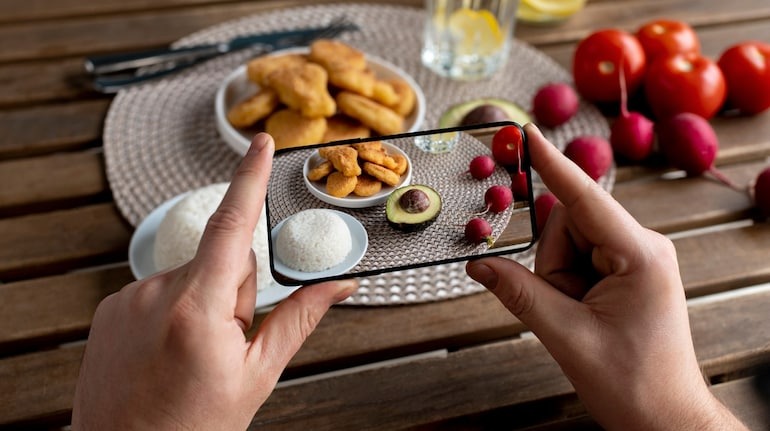
People scroll fast on Instagram. Really fast. A recent social media eye-tracking study found that users spend less than two seconds deciding whether a post deserves attention.
That makes your recipe caption and carousel text just as important as the photo or video itself.
A great dish can still flop if the formatting feels cluttered, confusing, or exhausting to read.
On the other hand, a clearly structured recipe with smart spacing and intentional wording can stop the scroll and guide the reader all the way to “Save post.”
Formatting is not decoration. It is usability.
This guide breaks down the best way to format recipes for Instagram captions and carousels so they feel natural, readable, and algorithm-friendly without sounding robotic or overproduced.
Why recipe formatting matters more on Instagram than anywhere else
Instagram is not a recipe website. That simple fact changes everything about how recipes should be written.
Users are not sitting down to cook while reading your caption.
They are browsing, often distracted, and usually on a phone. Formatting determines whether your recipe feels approachable or overwhelming.
Well-formatted recipes help with three things at once:
- They improve readability on small screens
- They increase saves and shares, which boosts reach
- They guide users smoothly from ingredients to action
Long paragraphs with no breaks rarely perform well. At the same time, dumping raw ingredient lists without context feels cold and forgettable.
The goal is balance. You want structure without stiffness and clarity without killing personality.
When formatting is done right, the reader never notices it. They simply keep reading.
How to structure captions so recipes stay readable without getting cut off
Instagram captions collapse after the first few lines, which makes the opening structure critical. Your first sentence should invite curiosity or offer a quick payoff.
After that, spacing becomes your best tool.
A strong caption structure often looks like this in practice:
- One hook sentence at the top
- A short context paragraph explaining what the dish is
- A clean break before ingredients or steps
- Clear visual spacing between sections
Avoid placing the full recipe before the “more” cutoff. Instead, tease value early and reward the tap.
This approach keeps readers engaged without overwhelming them. Think of the caption as a guided experience rather than a data dump.
Formatting is how you lead the reader, line by line.
Using concise summaries to streamline recipe intros naturally
Many creators struggle with long introductions that repeat what the image already shows. This is where smart summarization helps.
Instead of rewriting the entire recipe story, condensing the essence keeps captions tight and focused.
Tools like a content summarizer can help creators trim excess words while preserving meaning.
Using this tool allows you to shorten prep explanations or flavor descriptions into one clear sentence without losing context.
This is especially useful when adapting longer blog recipes into Instagram-friendly captions.
The goal is not to remove personality. It is to remove friction.
Shorter, cleaner intros help readers reach the actionable parts of your recipe faster, which directly improves saves and completion rates.
Best ingredient list formatting for Instagram captions and slides
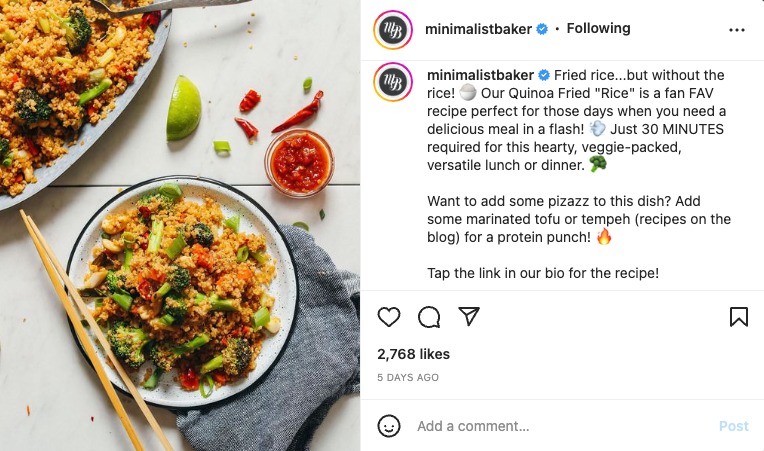
Ingredients are where formatting often breaks down. Long, unstructured lists are hard to scan on mobile.
The best way to format ingredients is to group them logically and visually.
Effective ingredient formatting includes:
- Grouping by recipe stage, such as base and topping
- Keeping each line short and consistent
- Avoiding unnecessary adjectives or brand mentions
Whitespace matters here. Each ingredient should feel distinct, not buried. If the list is long, consider moving it to a carousel slide where spacing is easier to control.
In captions, less is often more. The goal is instant clarity, not encyclopedic detail.
Step by step instructions that work in carousel format
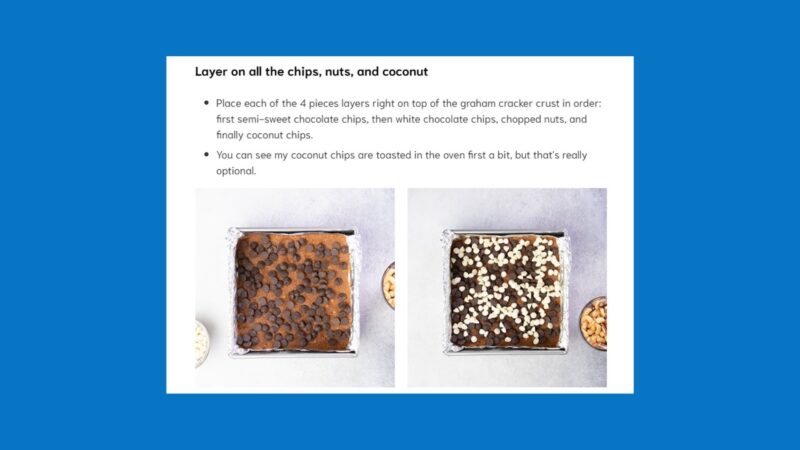
Carousels are ideal for cooking instructions because they mirror how people think while cooking.
One action per slide feels natural and reduces cognitive load.
A strong carousel flow usually follows this pattern:
- Slide one sets expectations and shows the finished dish
- Slides two through five cover core steps
- Final slide reinforces timing or serving ideas
Each step should start with a verb and focus on one action only. Avoid combining multiple instructions into one slide.
Short sentences work best. When readers swipe through a carousel and feel progress, they are far more likely to save the post for later use.
Using tables selectively for prep time and nutrition clarity
Tables are rarely used on Instagram, which makes them powerful when used sparingly.
A single, simple table can organize information that would otherwise clutter your caption.
A common example is a prep overview table:
| Prep Time | Cook Time | Servings |
| 10 min | 25 min | 4 |
This works best on a carousel slide rather than in the caption itself. Follow the table with one short paragraph explaining why these numbers matter.
Tables should clarify, not replace explanation. When used thoughtfully, they elevate perceived professionalism without feeling out of place.
Formatting for saves, not just likes
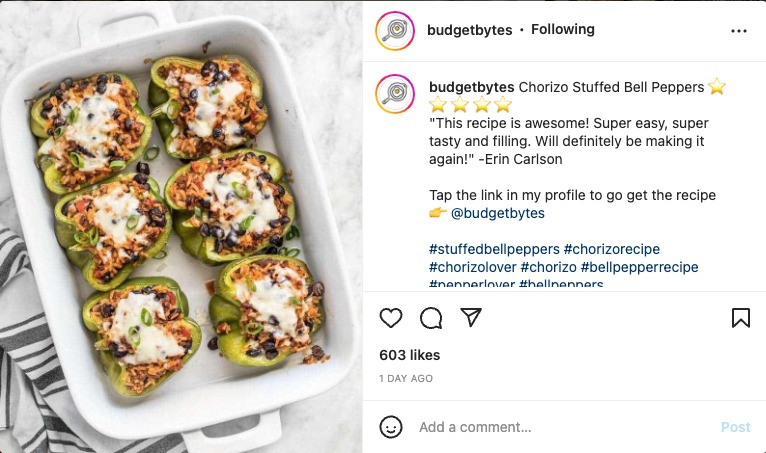
Likes are passive. Saves are intentional. Formatting directly influences whether someone believes your recipe is worth coming back to.
Save-friendly formatting includes:
- Clear steps that feel reusable
- Ingredient lists that are easy to screenshot
- Logical visual flow across slides
Avoid walls of text or overly decorative spacing that makes copying difficult. Remember that many users save recipes specifically to cook later.
If your formatting makes that harder, saves drop. Think like a future reader. Make the recipe feel like a tool, not a performance.
Common formatting mistakes that quietly hurt recipe performance
Some formatting habits feel harmless but consistently hurt engagement.
These include:
- Placing hashtags mid recipe instead of at the end
- Mixing measurements styles inconsistently
- Using excessive emojis inside instructions
Another common mistake is repeating the same formatting pattern in every post. Variety keeps feeds fresh.
Rotate between captions, carousels, and hybrid formats. Consistency is important, but rigidity is not.
Instagram rewards clarity and human rhythm, not templates that feel mass produced.
Conclusion
Formatting recipes for Instagram is not about copying what everyone else does. It is about respecting how people actually read on their phones.
Clean structure, intentional spacing, and thoughtful flow turn recipes into something usable, not just scrollable.
When formatting supports the food instead of competing with it, engagement grows naturally.
The best recipe posts feel effortless to read because a lot of care went into how they were built. If readers save your recipe and come back to it later, the formatting did its job.